I run by heart rate. Not the glance-at-it-after-the-run kind. The actual use-it-to-decide kind. Is this run easy enough? Am I pushing too hard? Should I slow down even though my legs feel fine? The number on my wrist decided a lot of that.
For over a year, that number came from my Apple Watch. I trusted it completely.
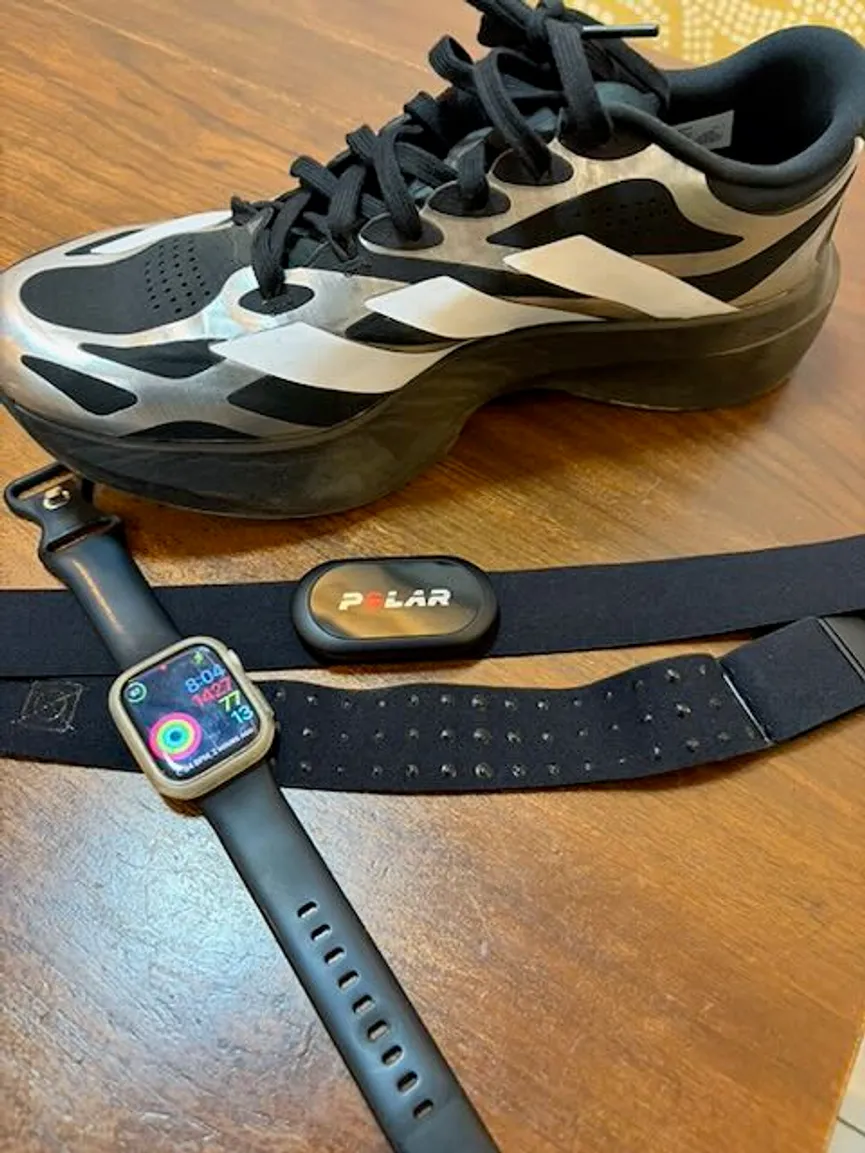
Then last week I clipped on a Polar H10 chest strap. And the numbers didn’t match.
For my runs, the watch had probably been under-reading more often than I realised.
Why I care about the number at all
Quick background for anyone who doesn’t train this way.
When you train properly, not every run is meant to be hard. Easy days are supposed to be genuinely easy — slow, relaxed, heart rate low. Hard days are where you push. The mistake most of us make is running the easy days a little too hard and the hard days a little too easy. Everything turns into medium. You get tired, but you don’t get faster.
Heart rate is how you stay honest. On an easy run I want to stay under a certain number. If I cross it, I slow down — even if I feel like I could go faster. When I had AI coach me for my TCS 10K, heart rate zones were basically the whole conversation. Pace tells you how fast you’re going. Heart rate tells you how hard your body is actually working. Those are not the same thing.
So the number isn’t decoration. I make decisions with it. Which means if the number is wrong, my decisions are wrong too.
The run where I noticed
I first felt something was off on the treadmill. Same machine, two different runs — one with the watch, one with the strap — and the strap kept showing a higher heart rate. Not by one or two beats.
Then on Sunday I ran a proper 10K event with the strap on. It averaged 159 bpm. On older watch-only runs at a similar effort, I would usually see something closer to 150 bpm.
Ten beats. That’s not a rounding error.
Ten beats can be the whole difference between “this is an easy run” and “this is actually a hard run.” For months, my watch had quietly been telling me I was taking it easier than I really was.
Why the wrist gets it wrong
It comes down to how each one measures.
Your watch shines a light into your wrist and watches how the blood flow changes underneath. From that, it makes a guess about your heart rate. It’s clever, but it’s still a guess — and it gets thrown off easily. Cold skin, a slightly loose strap, your arm swinging while you run, or a sudden hard effort — and the watch either lags behind or reads low.
The chest strap still has its own electronics and filtering, but it’s measuring much closer to the source. It picks up the actual electrical signal your heart makes — the same kind a hospital ECG machine reads.
That’s the whole thing. One estimates from your wrist. The other measures at your chest. When you’re pushing hard and your arm is bouncing all over the place, the wrist is exactly where the guess falls apart.
Why this matters if you train by HR
Here’s the real reason I bothered writing this.
If you don’t actually use heart rate — you just like seeing it after a run — then none of this matters. The watch is fine. It gives you a rough idea, and a rough idea is all you wanted.
But if you make decisions from the number, a wrong number quietly sends you the wrong way.
My “easy” runs were probably a bit harder than I thought. You show up to the next session more tired than the plan intended, and you don’t know why. It also matters for weight loss — not because low heart rate running is some kind of fat-burning magic, but because easier running is more repeatable. If I keep turning my easy runs into medium-hard ones, recovery suffers and staying consistent gets harder. None of these gaps are huge on a single run. But they add up over weeks and months.
The annoying part is you can’t tell on your own. The watch looks confident. It shows you a clean, steady number. You have no reason to doubt it — right up until you put something more accurate next to it.
You don’t have to throw away your watch
I’m not saying ditch the watch. I still wear mine every single day — it’s already on my wrist, and I’m not going to strap a band around my chest just to walk around the house.
The strap only comes out for the runs where the number actually drives a decision. That’s when being accurate is worth the small extra effort.
And it is a small effort. You wet the contacts, strap it around your chest, pair it to your phone. Thirty seconds. You feel it for the first minute and then forget it’s even there.
What I use now
My setup is simple. The Apple Watch handles daily tracking — sleep, steps, resting heart rate, and the normal activity history. The Polar H10 comes out for the runs where heart rate actually matters: intervals, tempo runs, treadmill tests, races, and any session where I want cleaner data to hand back to my AI coach.
So should you get one?
Simple way to decide.
If you train by heart rate and make real decisions from it — easy days, zones, recovery — get a chest strap. The number you’re building everything on should be the right number.
If you just want a rough sense of how hard you worked — your watch is already doing its job. Keep it and don’t overthink it.
For over a year I was in the first group, using a tool built for the second. I just didn’t know it.
My training didn’t change when I switched. My fitness didn’t change. The only thing that changed was that the number finally started telling the truth.
