
I don’t enjoy running.
I’m not saying that for dramatic effect. I genuinely don’t enjoy it. I find it boring. At some point during longer runs, my brain switches from “Let’s do this” to “Is this really necessary? Can we stop now? Maybe go back, have breakfast and sleep?”
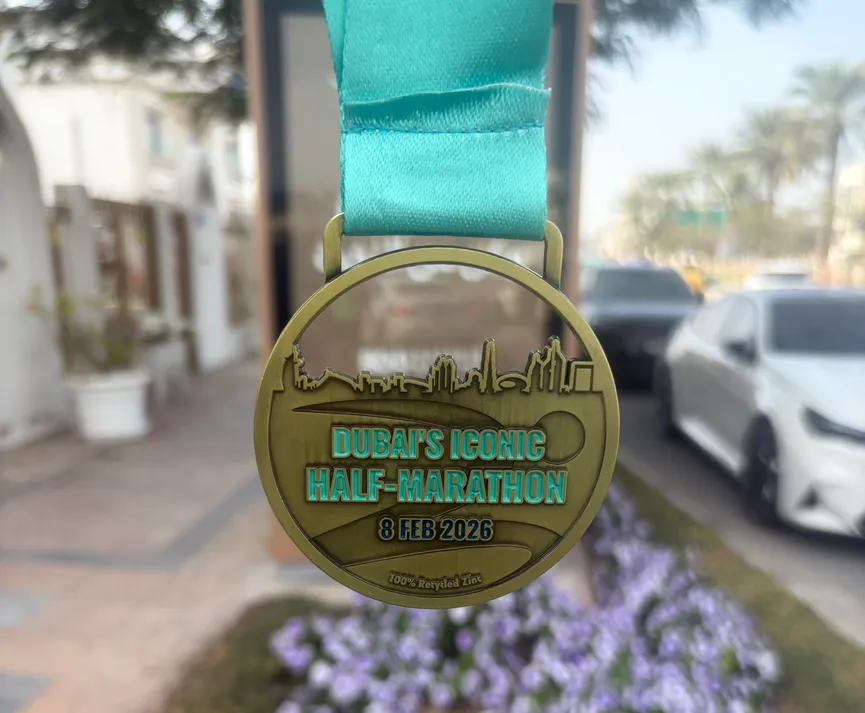
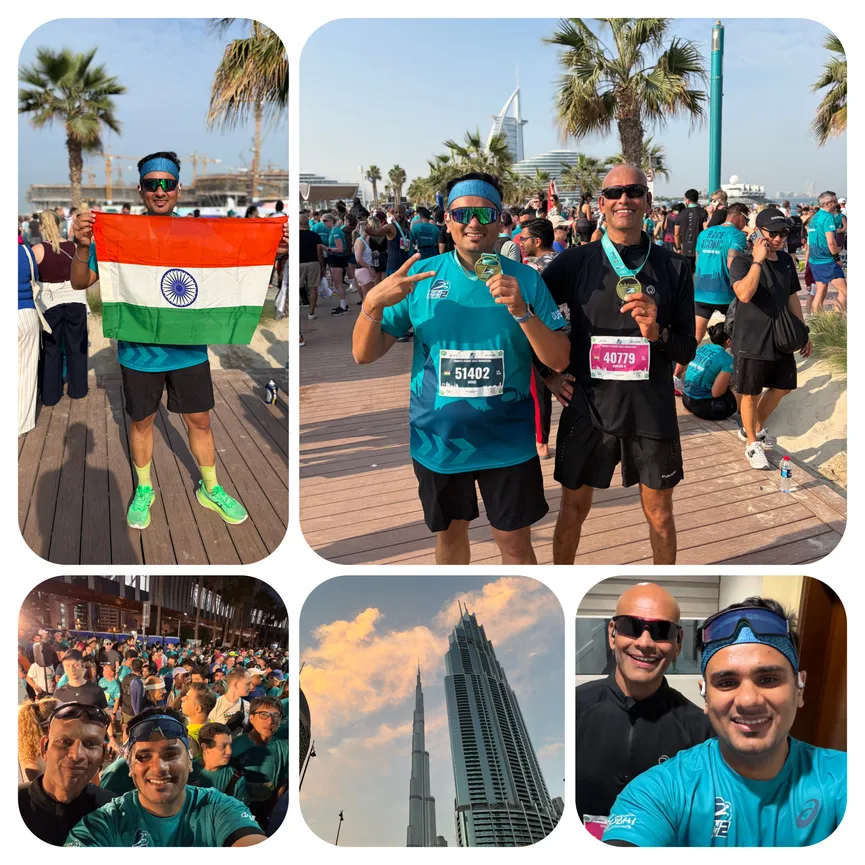
And yet, on February 8th 2026, I ran 21.1 kilometers in Dubai and finished a half marathon in 2 hours and 29 minutes.
This is that story.
The Wake-Up Call
Two years ago, I couldn’t run 400 meters continuously.
I wasn’t in a good place health-wise. My routine was simple — eat, eat, eat, and zero physical activity. This eventually caught up with me. My cholesterol and blood sugar were borderline.
At work, I have a colleague named Venky. Venky is the kind of person who takes the stairs everywhere. Four floors, every single time. One thing about Venky — if you’re going downstairs with him, you’re taking the stairs too. No exceptions.
The first few times I took those stairs with him, I was panting badly. Four floors and I was out of breath. He observed it and in one of our conversations, he said something simple that stayed with me — that I should probably start taking my health more seriously.
Coming from him, it didn’t feel like advice. It felt like perspective.
What’s interesting is that at Travelopia (where I work), the culture around health is very real. People talk about runs, mountain treks, gym routines, badminton matches, and healthy eating. It’s not forced — it’s just the environment. Venky took it a step further — he got stickers placed on each step of the staircase in our building. Each sticker tells you how many calories you’ve burned as you climb. By the time you reach the fourth floor, it reads something like 30 calories burned. Small thing, but it makes you think.
That environment nudged me to start.
Baby Steps
I had access to a gym in my apartment. So I started simple.
Inclined walks on the treadmill. Then 1 kilometer runs. Then 2 kilometers. Then I started mixing in 5K attempts — mostly running with walking breaks in between.
It was slow. It was unglamorous. Nobody was posting about it.
I even registered for the TCS Bangalore 10K 2024 once — and didn’t go. Just didn’t show up. I wasn’t ready and I knew it.
But then in November 2024, I ran my first proper 10K — the Canara Bank Bangalore 10K. I finished it. Nothing fancy, but I finished.
That was the first time I thought — okay, maybe I can do this.
Getting Hooked (Without Realizing It)
After the Canara Bank 10K, I started making 5K treadmill runs a regular thing. Once every two weeks at the apartment gym. Not a lot, but consistent enough.
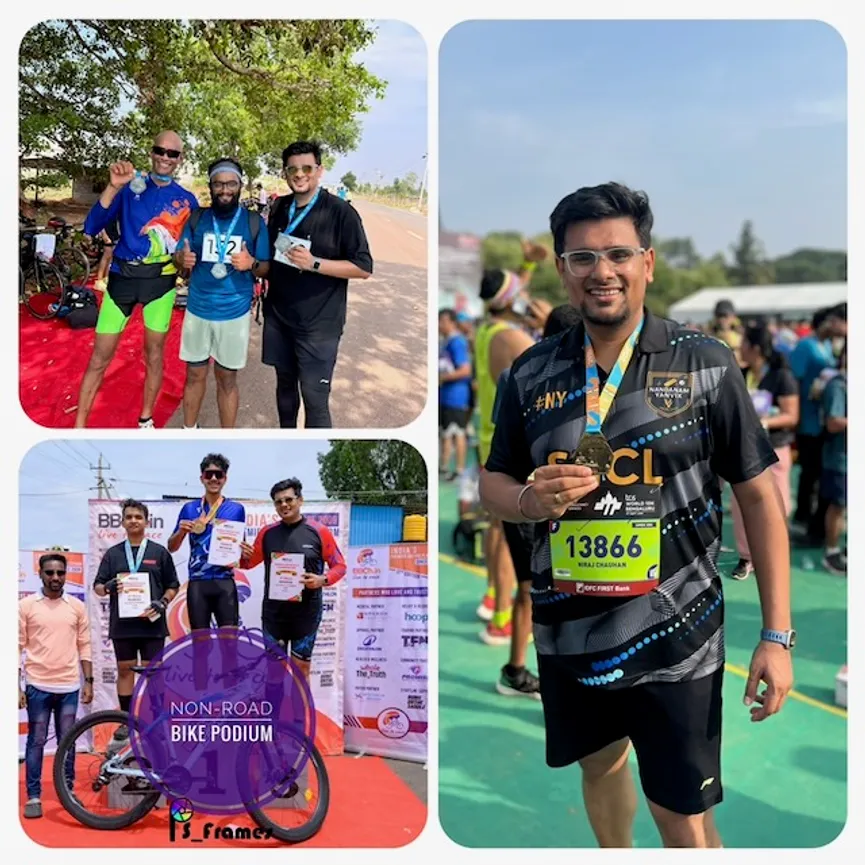
Then in 2025, I registered the TCS 10K again — this time I actually showed up & ran. And about a month after that, I did a Duathlon along with Mukesh & Prabhanjan. I also entered a cycling race and stood 3rd in the non-road-bike category. That surprised me. I’ve always enjoyed cycling, and placing third gave me a weird kind of confidence that maybe my body could do more than I was giving it credit for.
Somewhere in all of this, a thought started forming: “What if I push further?”
The Instagram Ad That Started Everything
Around mid-2025, I came across an ad on Instagram for the Burj2Burj Half Marathon in Dubai.
I started talking about it loudly in office. “Let’s go to Dubai and run a half marathon!” The way you talk about things when you’re more excited about the trip than the actual run.
Out of everyone who heard me, only one person took it seriously — Mukesh.
Now, Mukesh is not your average runner. He’s 50+, super fit, and an elite runner. The man takes running seriously.
He booked his tickets. Then he started asking me — “So, when are you booking yours?”
I was skeptical. Could I actually run 21 kilometers? I’d been doing 5Ks and the occasional 10K. A half marathon felt like a different world.
Mukesh gave me simple advice: “Try a half marathon in India first. If you can finish it, book Dubai.”
The Litmus Test (September 2025)
So I signed up for the Wipro Bangalore Half Marathon in September 2025. My first ever 21.1K.
I went out way too fast. The first few kilometers felt great — 6:27, 6:54 per km. I was flying. Or so I thought.
By kilometer 17, my calves completely locked up. Severe cramps. I ended up walking most of the last 4 kilometers. It was painful, frustrating, and humbling.
I finished in 2 hours 44 minutes.
But here’s the thing — I finished. I now knew two things:
- I can cover the distance
- I need to be much smarter about pacing
I booked Dubai that week.
The Training Month (January 2026)
This is where Mukesh became more than a running partner — he became my coach in every practical sense.
Every long run in January was his initiative. He’d message the group, set the time, pick the route. We did 10Ks, a 15K, and a few 5Ks together. He pushed me when I would’ve happily skipped a weekend.
The 15K run on January 24th was a turning point. For the first time, I genuinely enjoyed a long run. I ran at a controlled pace, felt energetic throughout, and at the end of 15 kilometers, my brain was saying “It’s just 6 more, let’s keep going.” We stopped because friends were tired, not because I was.
That was new. That had never happened before.
I also did something slightly unconventional — I used AI as my running coach. After every run, I’d share my Apple Watch activity screenshots with Claude and get a detailed breakdown: heart rate zones, pacing analysis, what went right, what to fix. It helped me build a proper race day pacing strategy, fueling plan, and taper schedule. In today’s era, having an AI coach readily available is incredibly useful — especially for someone like me who doesn’t have a formal running background.
Dubai Race Week
Thursday, February 5th — Flew to Dubai. 14,000 steps just from travelling and walking around.
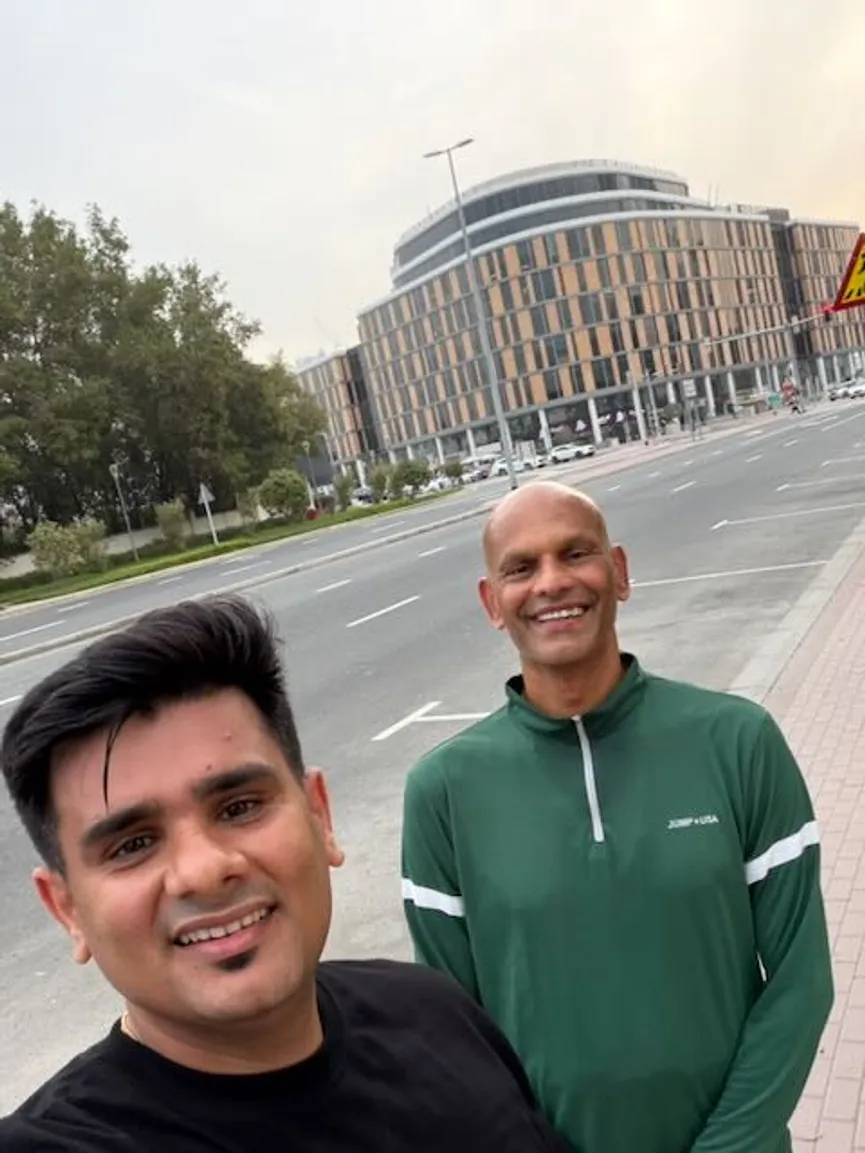
Friday, February 6th — Mukesh and I went for an easy morning run. Ended up accidentally setting a 5K personal record — 31:49 at a 6:20/km pace. I wasn’t even trying. I just started running and it felt natural. The first 3-4 kilometers had zero struggle.
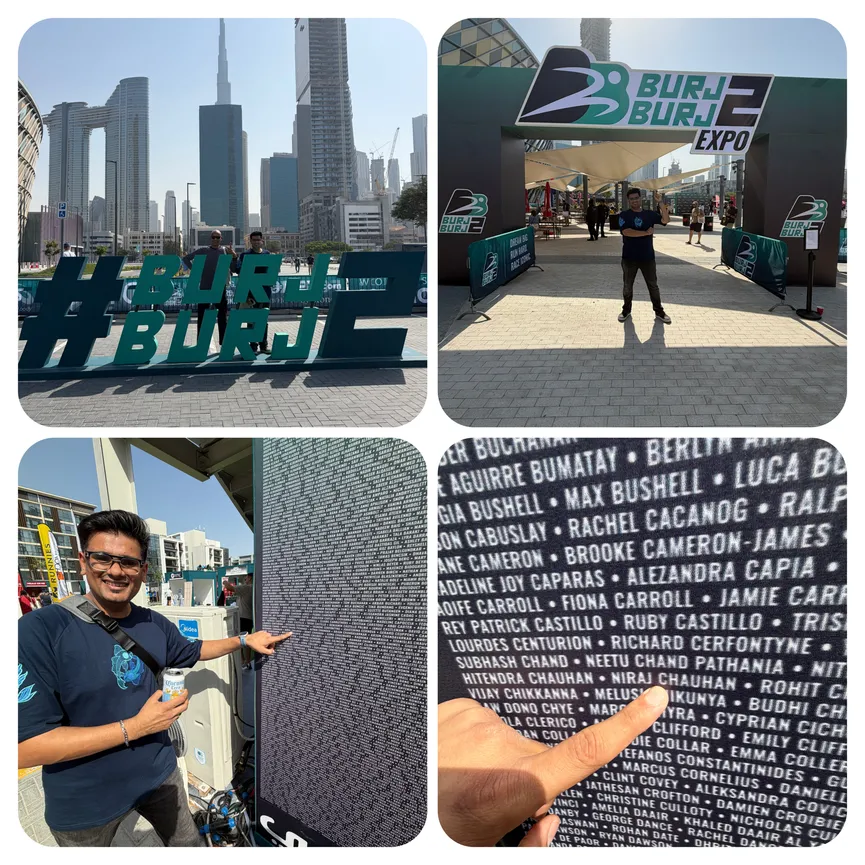
Saturday, February 7th — Collected my bib at the Burj2Burj Expo at Coca-Cola Arena. 23,000 steps from shopping around Dubai. Not exactly what taper week is supposed to look like.
Saturday night — Carb loaded with Lebanese meal. Set my alarm for 4:15 AM. Slept by 9.
Race Day
I woke up at 4:15 AM. Fully energetic. No nerves, no anxiety.
The reason was simple — I trusted my training. The January runs, the 15K, the pacing strategy — it all gave me confidence. I had a banana and a teaspoon of honey, and headed to the start.
At the starting area, the waves were organized by target time — elites first, then sub 1:30, 1:45, 2:00, 2:15, and then my wave: 2:30. That time was printed on my t-shirt. I looked at it and thought — “Let’s make sure this is right.”
The First 12 Kilometers
The gun went off and I deliberately started slow — 7:35/km for the first 2 kilometers. It felt too easy. That was the plan.
Between kilometer 2 and 3, I was running past the Burj Khalifa. I slowed down to take a photo. Some moments are bigger than pace.
Then I settled into my rhythm. 6:32, 6:43, 7:01, 6:43, 6:50, 6:33, 6:43, 6:47. Kilometer after kilometer, I was running at a pace that was actually faster than my 10K personal record. And it felt comfortable.
I ran the first 12 kilometers non-stop. No walking. No stopping.
I want you to understand what that meant to me. Two years ago, I couldn’t run 400 meters. And here I was, running 12 kilometers straight, in Dubai, at 6:40/km, and feeling good.
The Boredom Wall
Around kilometer 12, I had my first energy gel.
And then, around 14km something shifted. Not physically — mentally.
I wasn’t in pain. I wasn’t out of breath. I was just… bored. My brain checked out. The excitement of the start was gone, the novelty of running past Dubai landmarks had faded, and I still had 7 kilometers to go. I just wanted to finish, go back to the hotel, have a bath, eat breakfast, and sleep.
From kilometer 14 to 17, my pace dropped. Not dramatically, but the walk breaks started creeping in.
At kilometer 18, I started feeling a slight tingle of cramps in my calves. My immediate thought was — “Great, I jinxed myself by thinking I wouldn’t get cramps.” I slowed down, did some stretching, and switched to fast walking before running again.
Kilometers 18-20 were the hardest: 8:15, 8:05, 7:52. Not because of my body. Because of my mind.
The Finish
Then I saw the finish line. Kilometer 21. I pushed. I paced.
6:21/km for the last kilometer. The clock read 2:29.
I crossed the finish line and I had tears in my eyes.
Not because of the run. Because of everything it represented. The stairs with Venky. The apartment gym. The TCS 10K I didn’t show up for. The cramps in Wipro HM. Mukesh’s messages every weekend morning — “Cubbon Park, 6 AM?” Coming all the way to Dubai — just for a run.
And finishing exactly at the time printed on my t-shirt.
The Numbers
For those who like data, here’s how things changed:
| September 2025 (Wipro) | February 2026 (Burj2Burj) | |
|---|---|---|
| Time | 2:44:31 | ~2:29:00 |
| Avg Pace | 7:43/km | 7:05/km |
| Avg Heart Rate | 153 BPM | 154 BPM |
| Cramps | Severe at KM 17 | Slight tingle at KM 18 |
| Walking Started | KM 17 | KM 18 |
| Why I Slowed | Pain | Boredom |
| How I Felt After | Destroyed | Happy |
Same heart rate. 38 seconds per kilometer faster. The difference was smarter pacing, better preparation, and the right people around me.
Oh, and Mukesh? He finished in 2 hours 18 minutes. At 54. The man is a machine.
What I Learned
I’m not going to pretend this turned me into a runner. I still don’t enjoy running. I probably never will.
But here’s what I do know now:
You don’t need to love something to be good enough at it. You just need a reason, a plan, and people who won’t let you quit.
- Venky gave me the wake-up call
- Mukesh gave me the push, the training, and the belief
- My family gave me the reason to keep showing up
If you’re reading this and thinking “I could never run a half marathon” — I get it. I thought the same thing. I couldn’t climb 4 floors without panting, and registered for a 10K I never showed up for.
Two years later, I ran 21.1 kilometers in Dubai.
You don’t need to be a runner. You just need to start.